
To Buell or Not to Buell.....
- Fred

- Sep 23, 2025
- 21 min read
Updated: Oct 16, 2025

I remember way back when, which now seems to be very deep in the mists of time, when I tried to ride my first motorcycle across the Menai Bridge in North Wales.....
Of course, halfway across, I stalled the bloody thing and could not get it going again which pissed off a ton of motorists who were stuck behind me, as it was a single file bridge crossing back then on the Menai Bridge of the 1980 era.
I should have been killed on that Suzuki, truth be told, and it was a genuine miracle that I was in fact not killed riding it in the first 2 months that I owned it.
I quickly learnt the art of avoiding stupid and engaging brain to analyze developing situations as they arose, the hard way of course....
This first machine of mine was a 1976 Suzuki B120P, but it looked like a 1906 vintage piece of crap based on the rust it had been afflicted with in its miserable life up to me owning it.
I could not understand how the rust had broken out on the 2 stroke tank and the exhaust system, given how they were supposed to be prepped with primer before paint or chrome work was applied.
This was what it looked like when it was four years old when I bought it from Bangor Honda for a mere 120 quid.

It were a proper pile of crap that were!
I had bought it because it was the only machine I could afford with my grant money for my college education back then, such as it was.
Three weeks later, I tried to overtake a car on the right which was turning right with the indicator blinking for a left turn, while on my way to Llanddeusant, which is near Holyhead on the old B5420 in the town of LLangefni.
Not a very bright move on my part, despite the car's indicator and the resulting impact with the farmers land rover I hit cracked the crank case with a micro fissure which would later cause it to seize when it got too hot.
To this day I dunno why I tried to pass that landy on that side of the road....
My infant motorcyle brain had not realized I should have come to a complete stop behind it as she could not turn left.
The farmers wife driving it explained her right indicator malfunctioned, so she put the working one on hoping those following had a brain.
In the years that followed I deduced this exact same situation with several other female drivers piloting cars with one side of the vehicle's indicators not working and figured out what their plan was.
This was across several different continents. One even had a sign in the rear window stating the left indicator was malfunctioning.
This lesson did teach me not to trust anything any other driver was doing or indicating and to always ride with extreme caution, assuming the worst possible scenario would happen.
It has served me rather well actually.
A few months later, I took the mortally wounded Suzuki to a Wrexham scrap dealer and asked if I could burn it before the old guy there (Mr Owen) told me how valuable it was broken up for parts..
That was the second invaluable lesson I learnt while riding that darn thing!
Finding myself stuck without transport soon presented me with a fellow student at Bangor Technical college who had many reliable Honda motorcycles in his possession that he wanted to offload post haste.
I had at first surmised he was just a master bullshitter, but he was in fact not...He was just more experienced than us young un's.
Clayton had worked for Rolls Royce right out of school from the age of 15 but had found that he needed an actual education with relevant certification to go with his experience for brighter employment prospects.
He had looked after all of his machines with meticulous care and passion though.
He was 10 years older than us 17 somethings he was fraternizing with at the time, and he had this CB200 he sold me for 200 quid (UK money).
It looked brand new but it had 27,000 miles on the clock already by the time I got my grubby paws on it.

That CB200 was my first real introduction to Motorcycling and I rode it up and until I went back to South Africa in 1981.
Once I was back in South Africa it was more than clear that I would not be buying a new car there anytime soon due to the outrageous prices cars in South Africa demanded due to the shameful rape and pillaging the Apartheid government undertook out there with import duties that were and still are totally outrageous.
I ended up buying a 1974 Renault 16TS from a fleeing Rhodesian on his way to Florida in the US, but it needed hack engineering to keep it running and was not exactly reliable.
I only bought it because I felt sorry for the owner who sold me an oscar winning pile of BS about his situation and all he had to trade was his Renault 16TS.
I eventually ended up with 8 of these Renault 16’s from a gaggle of fleeing white farmers that I would rent out to University of Pretoria students as ultra cheap daily car rentals they could not get from Hertz and Avis due to the crazy costs and their lack of insureability.
We also cannibalized quite a good few of them who had made it to where they now stood in a serious state of broken in various remote farm locations all over the Transvaal province as it was then known as.
I had a little black book of addresses of some 200 Renault 16's in the Pretoria Geo that were too dire to buy as working units but perfect for random parts sourcing.
One of the fleeing farmers I ran into was a dab hand keeping these Renault 16's running and suggested he make some cash on the side being my mechanic to fuel his bar sessions and I split the proceeds with him 70/30.
He jumped at the idea quite happily as it solved a lot of problems for him and I threw a Rondawel into the bargain at a reduced rate.
I used this car rental money to maintain the hacked together by miracles fleet I had acquired for near nada with his help.
He was Polish and was a dab hand at engineering.
It eventually started taking too much of my time to get them all running after my Polish farmer mechanic pal shuffled off to Perth in Western Australia somewhere and left me with the whole shebang to manage solo and I had legal issues from students who had minor accidents and no insurance to deal with that eventually made me pack it all in.
Most old Renault's you find in Africa actually run in this fix me up home engineering and fervent prayer MO.
I have seen Renault 4 variants that have had more resurrections than Jesus himself that are true miracles of engineering!
I eventually bought a 1967 Volvo 122S in a dire cosmetic state but in a solid mechanical state and proceeded to spend a large chunk of money restoring it over a period of 4 years and ended up with a car that was far better than a new Hyundai Accent and which had cost me far less than a new car would have.
I knew the mechanic that had done all the mechanicals on it for the owner.

I had bought the Volvo at an auction for peanuts and then spent 4 years and some R32,000 South African Rand repainting, reupholstering and rebuilding the engine and gearbox.
I had a lot of guys helping me at lower-than-normal prices with all of the labor it required and these guys all owed me one way or another for favors I had rendered them over the years.
Those Volvo Amazons are practically indestructible, and I did 875,000 Km on mine before we rebuilt the 1.8 litre engine with oversized pistons, new crankshaft, new bearings, new cams, new belts, chains and well, everything, really.
The funny thing was it could have easily really run another 875,000 Km on the same engine before replacing these parts I had collected for it.
When we pulled it apart, just one bearing set needed replacement - kinda - probably could have still run for another 5 years without issues per my Volvo mechanic buddy who came over to inspect the wear and tear.
We only did the work because I had the parts and the Volvo mechanic pro bono, and it was in pieces...
Even the Carburation was new. I had written a letter to Volvo in Sweden pleading for parts (to buy) and they had sent me a collection of parts they had laying around gratis (which I was not expecting).
This included a fine pair of Stromberg carbs meant for a B20 which I fitted to my B18 without any problems.
The Lucas pair that was on it was a better carb for fuel economy though, but the Strombergs did produce more power.
I knew they had a stash of Amazon parts in their newer Torslandaverken plant in Gothenborg as one of the Swedish tourists I setup with a BMW motorcycle for his motorcycle pilgrimage across Africa worked there and he had shared his photos of their Amazon parts car stash.
These Volvo folks also shared with me the information that a lot of Massey Fergusson Tractor engine parts used the same dimension bearings and parts at cheap prices compared to the Volvo ones they knew I could not afford, which was most helpful of them back then.
I actually got a spreadsheet from them that listed near every part found in another car that could be used to keep the Amazon series running.
They also shared some of the 1980 series Ford Cortina parts that Volvo themselves were using for 122 restoration work - parts such as rubber engine mounts.
The ford ones were a much harder compound and not as soft as the Volvo Rubber, but you could not tell the difference when they were in the car and running.
The Ford rubber lasted a lot longer than the soft Volvo rubber as well. The Volvo rubber had a habit of shearing off at some point and needed regular replacement.
I actually made fibre glass dashboards for various Amazon models and would send them to Volvo for redistribution to some of their Volvo network on request as they no longer made them but had a huge demand.
I made more dashboards for left hand drive cars than for right hand drive ones.
That was one of the few parts they subbed out to another company in Sweden who made parts for Volvo for various car interiors, who had long since gone out of business by the time I was looking for parts like that.
In the meantime, my core transportation was always various motorcycles, and I always had at least two for regular transport purposes in case any one of them failed and was not running.
I never bought any new bikes unless they were absolute bargains in those years either.
I did not ride the Ducati or Velocette as regular transport either as they always let me down and stranded me in the worst possible location and position when I tempted fate and tried to use them that way.
I kept those break-fix adventures for weekends.
I did get company cars to drive around in when I was employed in South Africa by various employers I worked for, but I never owned my own "new" car myself due to the crazy purchase costs involved.
In England, if you had the same job as a guy in South Africa doing the same thing you could buy three cars for your net salary package, in South Africa a car was three times your annual salary on average and this is what made most of us flee Africa, not the stupid politics the place was beset with (though that did not help much either).
After the Volvo project was done I got sucked into another restoration scheme with a bunch of lads from Liverpool who bought used Land Rovers from the South African Army for absolute peanuts, and we then restored and sold them to aspiring Safari operators.
These lads had a capital problem, and I injected some spare cash I had from various enterprises I had on the go.
There was a new Safari company being setup in the Eastern Transvaal region near the Kruger National Park on a near weekly basis back then, so we were never short of victims to sell these Land Rovers to.
I even went to liquidation auctions and bought the same vehicles back if I got to hear about them in time.
Once we had made a decent buffer of cash from that jolly jape, we switched focus to Jaguar XJ6 cars and set about fixing the many problems with those things and then reselling them to niche market enthusiasts with various Chevrolet V8 motors, a roll cage and serious braking upgrades.
We should have stuck with the Land Rovers as the Jaguar Conversion projects, while all feats of incredible engineering, were not money makers like the Land Rover restoration fare was a money maker.
Land Rovers were really very easy to fix up and restore for cheap...Apart from the series one Land Rovers that is..
We soon learnt which ones to stay away from tho.
The Jaguars by comparison were a completely different kettle of fish and each one required slightly different engineering fixes - some minor but most major.
It is shocking how bad British Leyland Quality control was on those things.
Every V8 motor we put into these Jaguars also required a new prop shaft arrangement for the transfer of power and a fully automatic gearbox that went with it.
Mating the engine to various different automatic gearbox units and sorting the prop shaft out was where we spent the time and money on these conversions.
Jaguar manufactured these so bad that the doors were all different sizes with the rubber seals needing to be custom for each of the four doors on every car.
Some cars were made to real tight tolerances while others looked like they had been made by a scouse army high and drunk at the same time at their Speke plant in Liverpool.
Of course, all these XJ6 cars were actually made at the Coventry plant on Browns lane in Coventry and the shells were made at the Castle Bromwich facility in the Birmingham area but most of the 1972-1979 XJ6 fare looked like the scouse army of illiterate morons they had at their Speke plant had in fact built them instead.
They were that bad.
I am convinced that it was shop floor Marxism and consequential sabotage that put British Leyland out of business in the end, based on the shoddy work done on all of these Jaguar cars we messed with.
Meanwhile, some of the bikes I had inadvertently collected I had won in a poker game scam I ran with a few other owners of a bush pub that we all somehow were all mysteriously bequeathed by a mutual pal of ours who died in a helicopter accident - we all subsequently owned it as a collective and my working day job then was for S.A Telkom as a Microprocessor engineer in their research lab facility.
I was in charge of maintaining refrigeration and order at the bush pub operation when fights broke out with my rugby chums and others contributed their skills here and there.
We were not licensed so this was just drinks on private land capitalist style in a bush setting. It worked rather well actually.
I actually made more money from my bike parts biz than from my Telkom Salary though and the small but steady stream of cash from the bush pub helped as well.
A good few motorcycles I came into possession of I was just gifted by fleeing white farmers leaving Africa for good when I worked for South African Customs and Excise just before I joined Telkom.
Most of them were in a dreadful state and I dismantled and rebuilt the interesting ones I felt worthy of restoration, tapping into the parts network others had and bartering what I had in my vast parts collection for what they had.
It was quite a lot of fun actually.
We built cheap rondawels (Afrikaner version of a mud hut) on the bush pub property with plumbing for water and sewerage and rented them at a fraction of the cost of normal apartment and house rentals to these fleeing farmers and their surviving families waiting for passage to Australia, New Zealand, the EU and even back to Blighty. They all drank heavily while they waited and lived as cheap as they could for their tickets out of Africa.
Some of the nightmare horror stories they shared changed my life's course forever.
These folks took literally nothing with them to wherever they were going next. It was very sad in many ways.
They had brought their various vehicles and whatnot down from various parts of Africa before finally fleeing Africa in general.
Some of them had gone from the top of Africa to the bottom, being persecuted and murdered country by country until they had stopped in Mozambique or Rhodesia and they were not willing to have the same experience in South Africa as there was no other country to run to when an ANC run South Africa hypothetically started murdering all the white farmers.
We all knew this would happen, sooner or later, when Mandela came to power, it was just a question of time.
I made my own escape when Mandela in fact held the angry masses at bay in 1996 long enough for those of us who knew what was coming to make our escape.
One of my Scottish pals in Pretoria West had a huge covered shed warehouse facility right next to the Yskor steel fabrication plant where he worked at that he let me use to park and store all my hoarded jewels in.
He had a side gig in truck transportation and I used that to move stuff I had bought on the cheap in the far-flung corners of all the provinces at almost no cost.
The S.A Government had let these folks fleeing being murdered in other banana republic’s sans taxes into the country and then hired guys like me to hunt them down and extract said delayed taxes.
Many laughed at the suggestion we would reposses their vehicles and some even begged us to take their scrap crap away, so I did.
Some of the older British bikes I picked up this way were actually quite valuable and I even owned a charming Velocette 350 for ten years before flogging it to a British Tourist who took it back with him to Blighty (by Airfreight, no less).

Velocette 350 MAC
South Africa was also a strange place for buying old, new and weird motorcycles for dirt cheap back then.
Moto Morini for example had tried to setup shop in South Africa, thinking the folks with cash would buy their exotic and expensive fare.
The only problem with this scheme was their fare was 350cc and 500cc motorcycles, which the guys with money for exotic motorcycle fare in South Africa did not want to ride on the long and straight South African roads.
The motorcycle image of desire of the average rider out there was a Honda Gold Wing for some peculiar reason.
The reality was the few shops selling these exotic Italian bikes could not shift them and quite a few owners would bring them back after less than 100 km on the clock as they swiftly realized these were not the cheap and cheerful mass transportation at zero hassle vehicles to ride to work everyday nirvana that these outfits had sold them on.
That idea was from small town Italy with its quaint road network of twisty roads where you would go a few kilometers to your destination at a time and maybe ride 20 km at a push once in a blue moon.
This concept did not transplant from Italy to South Africa well at all.
South Africa did far better with 650 to 1000 cc motorcycles of the Highway traveler variety and even then, the buying public was very picky indeed.
After I had tried the Morini 500 Sport and then a Moto Guzzi V50 Monza, I started to see big Yamaha and Suzuki machines come onto the market for real bargains.
Kawasaki had unfortunately given the triple cylinder motorcycles a bad rap with their entire KH series from the 250 all the way up to the 750 back in the mid 1970's.
I won my first three of these KH series machines in a poker game at our bush pub from a guy who was an incurable drunk for a less than one hundred South African Rands outlay.
All we had to do was wait until he was well soused and then invite him to a game table where the rest of us were all sober and ready to deliver a fleecing to the willing participant.
He would on occasion bet his entire motorcycle collection on a single hand of poker and I was well versed in redistributing his wealth by this stage of the game.
He was very good at the ponies though and would often restore his losses with his next big win at the racetrack by the next Wednesday and the whole cycle would rinse and repeat itself again and again.
One of his brothers was a jockey and he had an ear for loose tongues and had picked up which ones would run well in all sorts of conditions and when the fix was in on a favorite.
I actually did him a big favor as all of those 2 stroke triples that Kawasaki made in those years were very dangerous machines that we all referred to as widow makers.
If he had actually ridden any of them, he would have been killed outright as his drunken state and those machines were never a match made in heaven.
He never could explain why he had to own them either. I never did see him do anything other than pose for photographs on the darn things.
In a three-week period of 1983, I had come to own, ride and almost immediately sell or scrap the entire range of Kawasaki KH series for parts from this one guy.
I started with the KH250 triple, then a 400, then the KH500 and finally a series of KH750 variants which were swiftly consigned to the motorcycle parts business on cognition of the danger they represented to the motorcycling general public at large.
I had found, quite by mistake, that a four hundred Rand cheap motorcycle would easily fetch R2000 as parts if you had the time and patience to get rid of them that way.
Yamaha also made a range of 2 stroke commuter machines with 100cc and 125cc engines and I had me a grand old side business selling these as parts to kids who owned 50cc machines you could easily bolt a 100cc or 125cc engine into.
I even fabricated metal brackets to fit some of them with kits I made more cash from than the actual engines themselves.
I rode a good few of those 100 and 125cc Yamaha machines for a month or so before breaking them up for parts.
On the higher end of the Japanese motorcycle market, Yamaha had imported a lot of XS750 and XS850 triple cylinder four stroke machines into South Africa, not realizing the KH750 triple association was going to be a market killer for them.
Someone in Japan was not doing their research very well at all.
All the public saw was three cylinders and compared it to these older KH750's which was a total disaster of a motorcycle and they passed on the strange concept and notions that triple cylinder motorcycles brought with it.
To most South Africans motorcycles were either twin cylinder affairs for machines up to 400cc and everything else had to be either a straight four or a big V-Twin from Harley, Ducati or Moto Guzzi.
I used to go around to all the motorcycle dealers in Johannesburg, Pretoria, Bloemfontein and Ladysmith looking for XS series triples with very low mileage on them and buy them for absolute bargains.
I did briefly dabble with the notion of the big Laverda triples until a few of my pals killed themselves on them and then I rode one to determine viability and immediately killed that idea. They had terminal habits them things!
Laverda was a combine harvester company and their motorcycles emphasized that fact rather dramatically.
I once picked up five of the trusty Yamaha XS750 machines on one trip to the far north of what was then called the Transvaal province in a town called Pietersburg.
The Yamaha dealer there had three that did not even have one kilometer on them and two with less than 300km and these things had just been sitting there gathering dust.
I bought them all cash for the price of a new Z650 Kawasaki he was selling like hot cakes.
My general MO was to drive the best one I could find for 6 or seven months before I found a newer and lower mileage one in a more pristine condition than my current ride, which I then sold on to British, German and American tourists for their relatively cheap African biking adventures.
As these machines were shaft drive, the tourists loved them, and I was the go-to guy for Yamaha XS triples in South Africa between 1985 and 1996.
Several Germans once rode three of my XS750's all the way back to Stuttgart once they had finished touring South Africa.
There were also other odd duck motorcycles that could be had for peanuts from Honda that they could never sell to the public, like the CX500 V-Twin for example.
This was before they turbo charged them and turned that series into the second most dangerous motorcycle ever made, but the CX500 normally aspirated series was another motorcycle that could never get sold in South Africa because it did not have the power for the long dusty roads and it was big and very heavy to boot.
I sold a lot of CX500's to British tourists who arrived in South Africa in search of cheap motorcycle transportation (in their terms).
In our currency converted to sterling these things were as cheap as chips for these adventure tourists.
It was only when Honda turbo charged these slugs that the CX500 got the reputation as a Window maker. The brakes on the CX500T were totally useless, and the turbo had a nasty habit of kicking in when you were braking!
Many of these situations came with fine pine box ceremonies shortly after said Turbo feature had kicked in.
The boring slug variant of the CX500 though was a pretty reliable shaft drive machine that gave few hassles other than literally boring you to death.
I knew one crazy French journalist who drove over 300,000 Km on one of these before it was shot up by a drunken terrorist with an AK47 somewhere in Rwanda.
When Suzuki, Yamaha and Kawasaki tried to up the ante with the 650 class in South Africa a few years later we also soon had a whole slew of 650 series machines that you just could not sell for one reason or another.
The Kawasaki Z650 four was the exception, and these were quite expensive which is why I never owned one.
I myself rather liked the exceptionally boring Yamaha XJ650 in silver and blue as it was a shaft drive machine that just never broke or died.
For some reason the shaft drive Yamahas were not popular in South Africa either, but I did the most miles on my Red XS750E without a single breakdown incident on the thing ever.
I owned that one from 1350 Km on the clock that some Motorcycle dealer in a far flung town called Potgietersrus just could not sell.
He was pretty relieved when I gave him R1700 cash for it.
I think the XS1100 machines, which was another Window maker gave Yamaha a bad reputation with these bigger machines out there.
The Suzuki GS850G and 1000E machines were quite sought after and I did actually buy a used GS850 at one point and marveled how smooth it was until the first service came along.
These things had horridly complex top ends that needed constant mechanical adjustment that cost a lot of cash for the average punter.
I had four of these Yamaha XS750 series machines in 1986 and also did serial replacements for cheap on these before I decided I needed an XJ900 and stuck with that until I got a FJ1100 then a FJ1200.
I always kept the one XS750E though, as my second bike.
From time to time, I would acquire a Katana 650 for peanuts, ride it for 6 weeks then get rid of it. It had terrible quirks in fast corners did that thing.
I was buying odd duck machines like the BMW R45 from dealers with just test drive mileage on them for next to nothing and also farming these out to my tourist connections in Cape Town for tourists to drive up to Swakopmund in Namibia on.
I would buy these back for 1/3 of the price I sold them to these guys for, and I had a few men of color from Cape Town service them for me at a special discounted price.
They usually scored big when we sold them to their pals and they made cash servicing them on the side with the parts biz we had going.
The BMW odd ducks were very popular with the tourists for some reason I could never quite fathom and I had a side business acquiring RS75/5 and RS 60/6 machines and parts for worldwide parts distribution to Australia and New Zealand as well.
I drove a lot of these before making them into parts bins that went into containers that were then shipped to far flung corners of the empire through my contact at a shipping company called Ellerman and Bucknall.
In all, by the time I decided to leave South Africa for the muddy Island on a permanent basis in 1996, I had owned a bike for every year I had been alive at that time, which was 33.
My 34th machine was my California 2021 KLX300 and my 35th is my current ride, a 2009 Buell Ulysses XT variant with a belt drive system.
Looking back, I have owned an astounding array of these odd duck motorcycles and had quite a hoot and adventure while at it to boot.
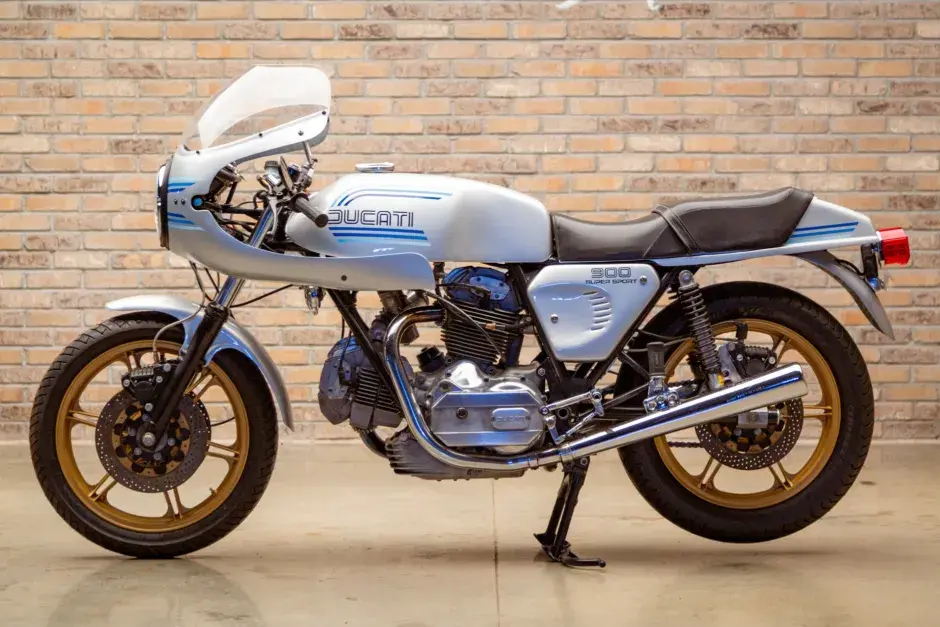
I even owned a Ducati 900SS that used to just stop running in the rain, but it was so pretty to look at that I just kept the bloody thing for sunny ride weather or for purposes of just staring at it.
As you can see it is a very pretty machine.
I think that thing was easily the best handling motorcycle I ever threw around the Kyalami racetrack.
When I decided to leave South Africa in 1996 for the Muddy Island after Madge Networks picked me up and hired me in Johannesburg, I briefly dabbled with a Van Veen OCR 1000 which I just gave away to a Rugby pal of mine at Beaconsfield rugby club as well as a stange thing called an Odyssey which had a Citroen GS1300 car engine and gearbox strapped to a steel girder for a frame.
That thing could have pulled train cars but getting around a corner was a dreadful experience.
When I came to the USA my jam had already switched from bikes to gliders that I started to transition to while in South Africa, and flying soaked up a lot of my spare dollars.
I had actually got my Motorglider license in the U.K to go with my Glider pilot license and they had allowed me to fly normal power planes on that license here in the USA.
I flew a Katana DA20 for quite some time out of Buchanan airfield and did not really hanker after motorcycling adventures here on taking note of the terrible state of the roads in California.
These are best traversed with machines built for trans Africa adventures such as the BMW GS series motorcycles that can soak up the bumps.
Watching that Train Spotting Scot Ewan McGregor drive a pair of Electric Harleys up through South America with his pal Charlie had me hankering for a motorcycle once more...
The Buell Ulysses XB12XT adventure touring machine has a good suspension for the crappy California tarmac, and they can also be acquired for dirty deeds done dirt cheap.

So here I am slowly restoring my Buell to its former pristine glory and having a lot of stirred up memories of my many past African motorcycling adventures that bring many smiles to my maw while at it.
I do miss the South Africa of the 1980's.....it was a fabulous experience - until it wasn't.
I actually got this machine because one of the customers I sell my IT Infrastructure gear to is into adventure riding, and after an absence of 27 odd years wanted to get into that for myself while meeting new people and making new friends.
It even came in the company colors (well, I deliberately chose a red one for that reason)....
So I am now on a new adventure that blends business with pleasure and just riding the wave to see where it takes me.
Golf has died as a hook, time to try some Buell based adventure touring!!
Good times!


Comments